—Francis Scott Key, 1814
O say, can you see, by the dawn's early light,
What so proudly we hail'd at the twilight's last gleaming?
Whose broad stripes and bright stars, thro' the perilous fight,
O'er the ramparts we watch'd, were so gallantly streaming?
And the rockets' red glare, the bombs bursting in air,
Gave proof thro' the night that our flag was still there.
O say, does that star-spangled banner yet wave
O'er the land of the free and the home of the brave?
On the shore dimly seen thro' the mists of the deep,
Where the foe's haughty host in dread silence reposes,
What is that which the breeze, o'er the towering steep,
As it fitfully blows, half conceals, half discloses?
Now it catches the gleam of the morning's first beam,
In full glory reflected, now shines on the stream:
'Tis the star-spangled banner: O, long may it wave
O'er the land of the free and the home of the brave!
And where is that band who so vauntingly swore
That the havoc of war and the battle's confusion,
A home and a country should leave us no more?
Their blood has wash'd out their foul footsteps' pollution.
No refuge could save the hireling and slave
From the terror of flight or the gloom of the grave:
And the star-spangled banner in triumph doth wave
O'er the land of the free and the home of the brave.
O thus be it ever when free-men shall stand
Between their lov'd home and the war's desolation;
Blest with vict'ry and peace, may the heav'n-rescued land
Praise the Pow'r that hath made and preserv'd us a nation!
Then conquer we must, when our cause it is just,
And this be our motto: “In God is our trust!”
And the star-spangled banner in triumph shall wave
O'er the land of the free and the home of the brave!
To read the story behind the writing of our anthem click here or here.
Monday, July 03, 2006


Sunday, July 02, 2006
Standing on the Promises
Standing on the promises
of Christ my King,
Thru eternal ages
let His praises ring;
Glory in the highest
I will shout and sing,
Standing on the promises of God.
Refrain
Standing, standing,
Standing on the promises
of God my Savior;
Standing, standing,
I'm standing on the promises of God.
Standing on the promises
that cannot fail,
When the howling storms
of doubt and fear assail,
By the living word of
God I shall prevail,
Standing on the promises of God.
Standing on the promises
of Christ the Lord,
Bound to Him eternally
by love's strong cord,
Overcoming daily with
the Spirit's sword,
Standing on the promises of God.
"Standing on the Promises" is described as a " ... straight-forward ... gospel hymn ... (and) a favorite with God’s people for ... a century ..." It was published as part of a hymnal, "Songs of Perfect Love," the same year it was written.
Carter was an interesting individual with diverse interests. Born in Baltimore, Maryland on November 18, 1849, he was an outstanding athlete at Pennsylvania Military Academy. He was also a member of that school’s first graduating class in 1867. He returned to teach a number of subjects--chemistry, natural science, civil engineering, and mathematics–over several years.
Woven through Carter’s life were other occupational pursuits. He was the author of several novels as well as a number of textbooks used in his classes. He saw personally the texts were printed and distributed; that makes him a publisher.
Carter assisted in collecting sacred music for two hymnals; one was mentioned earlier. He wrote many of the selections himself. During his career as minister, he became an active leader in Holiness, camp meeting movement.
Carter also spent some time in California as a sheep rancher. Later he studied medicine and became a practicing physician in Baltimore.
R. Kelso Carter died August 23, 1928 at Catonsville, Maryland.
Hat Tip: Workers for Jesus
of Christ my King,
Thru eternal ages
let His praises ring;
Glory in the highest
I will shout and sing,
Standing on the promises of God.
Refrain
Standing, standing,
Standing on the promises
of God my Savior;
Standing, standing,
I'm standing on the promises of God.
Standing on the promises
that cannot fail,
When the howling storms
of doubt and fear assail,
By the living word of
God I shall prevail,
Standing on the promises of God.
Standing on the promises
of Christ the Lord,
Bound to Him eternally
by love's strong cord,
Overcoming daily with
the Spirit's sword,
Standing on the promises of God.
Lyrics By: R. Kelso Carter, 1849-1926
R. Kelso Carter became an ordained Methodist minister (1887) at the age of 38. A year earlier, he was a professor at the Pennsylvania Military Academy. There he wrote a hymn, "Standing On the Promises," after reading one of Apostle Paul’s letters in Second Corinthians. It was Chapter 1, Verse 20 that caught his attention: "For all the promise of God in him are yea, and in him Amen, unto the glory of God by us."
R. Kelso Carter became an ordained Methodist minister (1887) at the age of 38. A year earlier, he was a professor at the Pennsylvania Military Academy. There he wrote a hymn, "Standing On the Promises," after reading one of Apostle Paul’s letters in Second Corinthians. It was Chapter 1, Verse 20 that caught his attention: "For all the promise of God in him are yea, and in him Amen, unto the glory of God by us."
"Standing on the Promises" is described as a " ... straight-forward ... gospel hymn ... (and) a favorite with God’s people for ... a century ..." It was published as part of a hymnal, "Songs of Perfect Love," the same year it was written.
Carter was an interesting individual with diverse interests. Born in Baltimore, Maryland on November 18, 1849, he was an outstanding athlete at Pennsylvania Military Academy. He was also a member of that school’s first graduating class in 1867. He returned to teach a number of subjects--chemistry, natural science, civil engineering, and mathematics–over several years.
Woven through Carter’s life were other occupational pursuits. He was the author of several novels as well as a number of textbooks used in his classes. He saw personally the texts were printed and distributed; that makes him a publisher.
Carter assisted in collecting sacred music for two hymnals; one was mentioned earlier. He wrote many of the selections himself. During his career as minister, he became an active leader in Holiness, camp meeting movement.
Carter also spent some time in California as a sheep rancher. Later he studied medicine and became a practicing physician in Baltimore.
R. Kelso Carter died August 23, 1928 at Catonsville, Maryland.
Hat Tip: Workers for Jesus
Wednesday, June 28, 2006
Lavender
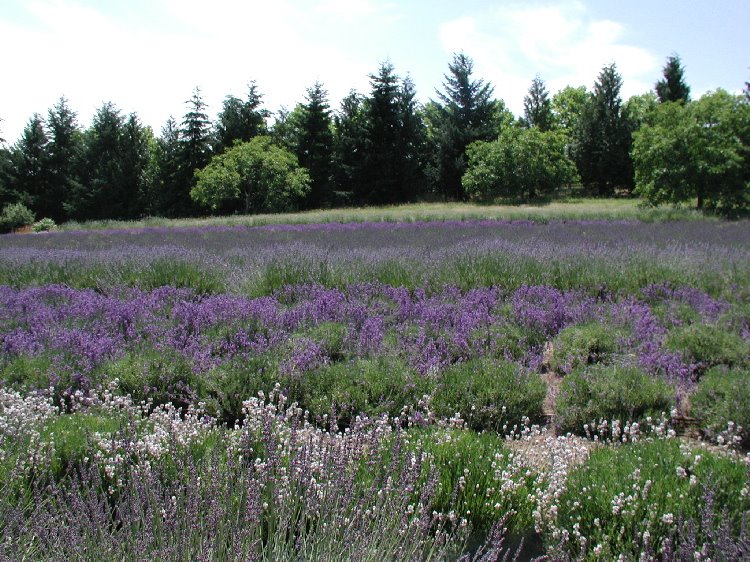 I was headed to Newberg this afternoon to visit a couple of our patients. I passed by a lavender farm that I have never seen open before. I love lavender--the plant, the color and the scent. So I had to stop and get a bunch to take to the ladies I would be seeing. The kids were manning the booth while Mom took a break. The middle child, a boy, asked if he could help me and seeing I was wearing a dress and high heels, he gallantly asked if he could pick a bouquet for me. I told him that would be very nice of him. He then asked which kind of lavender that I would like. The field was full of several varieties that I had never seen before. I didn't have to think long to say I wanted a little of each. While he was cutting my bouquet, I had to take a few photos of the wonderful field and an artist quietly working with her pastels. I am happy to share the photos, but I wish I could share the delightful scent as well!
Sunday, June 25, 2006
I Will Sing the Wondrous Story
I will sing the wondrous story
Of the Christ who died for me,
How He left His home in glory
For the cross of Calvary.
Yes, I'll sing the wondrous story
Of the Christ who died for me.
Sing it with the saints in glory,
Gathered by the crystal sea.
I was lost, but Jesus found me,
Found the sheep that went astray,
Threw His loving arms around me,
Drew me back into the way.
Days of darkness still come o'er me;
Sorrow's paths I often tread.
But the Savior still is with me;
By His hand I'm safely led.
He will keep me till the river
Rolls its waters at my feet;
Then He'll bear me safely over,
Where the loved ones I shall meet.
Words by Francis H. Rowley, 1854-1952
Peter P. Bilhorn was born in Mendota, Illinois, in 1865. With the death of his father, Peter was forced to leave school at eight years of age to help support his mother and family. At the age of fifteen he moved with his family to Chicago, where his voice became a great attraction in concert halls and among his worldly comrades. When he was twenty he was converted to Christ at one of the meetings conducted by Dr. Pentecost and musician George Stebbins. Following his conversion, he was used greatly of God in various forms of Christian service.
The organ he used in services was a small folding organ bearing his name. Feeling the need of a small portable organ for use in the street meetings,he had designed a folding organ weighing only sixteen pounds and had started its manufacture in 1887. This venture proved most successful, and the organs were widely used around the world.
It is estimated that he wrote approximately 2,000 gospel songs. This particular hymn is one of his finest compositions. Peter Bilhorn is also the author and composer of "Sweet Peace, The Gift of God's Love". His evangelistic ministry carried him into all the states of the union, to Great Britain, and to other foreign countries. He preceded Homer Rodeheaver as Billy Sunday's song leader prior to 1908.
P. P. Bilhorn was not only a skillful songwriter and leader but also an earnest soul-winner. One night, while conducting revival meetings in Reedsburg, Wisconsin, he retired to his room but later felt strangely compelled to dress, take his folding organ, and start walking down the street, even though the weather was bitterly cold. Seeing a gleam of light from a basement window, he knocked and was admitted. He found a group of men gambling. Bilhorn began to sing to the men "Where is My Wandering Boy Tonight?" Six of these men made their peace with God that night. "I Will Sing the Wondrous Story" was presented by Rowley and Bilhorn to Ira D. Sankey as a gift. Sankey was so impressed with the merit and usefulness of this hymn that he published it in the 1887 edition of Gospel Hymns and Sacred Songs and Solos. It soon became one of the most popular songs in the entire collection.
"God sent His singers upon the earth With songs of sadness and of mirth, That they might touch the hearts of men, And bring them back to heaven again." Longfellow
"The Christian life that is joyless is a discredit to God and a disgrace to itself." Maltbie D. Babcock
Hat Tip: Dr. Chadwick's Hymn Backgrounds
Of the Christ who died for me,
How He left His home in glory
For the cross of Calvary.
Yes, I'll sing the wondrous story
Of the Christ who died for me.
Sing it with the saints in glory,
Gathered by the crystal sea.
I was lost, but Jesus found me,
Found the sheep that went astray,
Threw His loving arms around me,
Drew me back into the way.
Days of darkness still come o'er me;
Sorrow's paths I often tread.
But the Savior still is with me;
By His hand I'm safely led.
He will keep me till the river
Rolls its waters at my feet;
Then He'll bear me safely over,
Where the loved ones I shall meet.
Words by Francis H. Rowley, 1854-1952
Francis H. Rowley was born in Hilton, New York, on July 25, 1854. Later he became a Baptist minister and served churches in Massachusetts, Pennsylvania and Illinois. He has given the following account for the writing of this hymn: I was minister of the First Baptist Church of North Adams, Massachusetts in 1886. The church and community were experiencing a period of unusual interest in religious matters, and I was assisted by a remarkable young Swiss musician by the name of Peter Bilhorn. One Sunday following the evening service he said, "Why don't you write a hymn for me to set to music?" During the night these verses came to me. The original poem began "Can't You Sing the Wondrous Story?" However, when the song was first published by Ira Sankey in 1887, the phrase was changed to "I Will Sing..."
Peter P. Bilhorn was born in Mendota, Illinois, in 1865. With the death of his father, Peter was forced to leave school at eight years of age to help support his mother and family. At the age of fifteen he moved with his family to Chicago, where his voice became a great attraction in concert halls and among his worldly comrades. When he was twenty he was converted to Christ at one of the meetings conducted by Dr. Pentecost and musician George Stebbins. Following his conversion, he was used greatly of God in various forms of Christian service.
The organ he used in services was a small folding organ bearing his name. Feeling the need of a small portable organ for use in the street meetings,he had designed a folding organ weighing only sixteen pounds and had started its manufacture in 1887. This venture proved most successful, and the organs were widely used around the world.
It is estimated that he wrote approximately 2,000 gospel songs. This particular hymn is one of his finest compositions. Peter Bilhorn is also the author and composer of "Sweet Peace, The Gift of God's Love". His evangelistic ministry carried him into all the states of the union, to Great Britain, and to other foreign countries. He preceded Homer Rodeheaver as Billy Sunday's song leader prior to 1908.
P. P. Bilhorn was not only a skillful songwriter and leader but also an earnest soul-winner. One night, while conducting revival meetings in Reedsburg, Wisconsin, he retired to his room but later felt strangely compelled to dress, take his folding organ, and start walking down the street, even though the weather was bitterly cold. Seeing a gleam of light from a basement window, he knocked and was admitted. He found a group of men gambling. Bilhorn began to sing to the men "Where is My Wandering Boy Tonight?" Six of these men made their peace with God that night. "I Will Sing the Wondrous Story" was presented by Rowley and Bilhorn to Ira D. Sankey as a gift. Sankey was so impressed with the merit and usefulness of this hymn that he published it in the 1887 edition of Gospel Hymns and Sacred Songs and Solos. It soon became one of the most popular songs in the entire collection.
"God sent His singers upon the earth With songs of sadness and of mirth, That they might touch the hearts of men, And bring them back to heaven again." Longfellow
"The Christian life that is joyless is a discredit to God and a disgrace to itself." Maltbie D. Babcock
Hat Tip: Dr. Chadwick's Hymn Backgrounds
Friday, June 23, 2006
Are you right or left brained?
Just a bit of fun to try. If I had taken this many years ago, I would have come out the other way. But I think I became wiser as I have aged. I don't sweat the little things so much anymore. So, what are you?
Brain Lateralization Test Results |
| Right Brain (68%) The right hemisphere is the visual, figurative, artistic, and intuitive side of the brain. Left Brain (38%) The left hemisphere is the logical, articulate, assertive, and practical side of the brain |
personality tests by similarminds.com
Hat Tip: View from the Cloud
Thursday, June 22, 2006
A Call for Help!
I saw this wonderful project for the fifth anniversary of 9/11 from Gayle over at My Republican Blog. It is a great way to honor those who lost their lives on September 11, 2001. Please take a look and decide if you can commit to participate.
Original post follows:
I have a project and I need the help of a few bloggers to make it work.
2,995 bloggers.
September 11, 2006 will mark the 5-year anniversary of the attacks that killed 2,996 innocent people on American soil. A few months ago I started wondering what, if anything, I would write in my blog that day. A remembrance? A tribute? Anything I came up with seemed shallow, cliché, not enough.
About a week after the attacks the president ordered all flags returned to full-staff. This seemed too soon to me. A common practice for other deaths had been one day per victim. But when I realized that this would mean flying the flag at half-staff for over sixteen years (remember in those first days the death toll estimate was much higher) I realized that that sort of symbol wouldn’t be healthy for the country. Even with the actual death toll, one day at half-staff for each victim wouldn’t see the flag raised until November 24, 2009.
But any idea I came up with gave me the same pause: Nothing I could do could possibly do tribute to all those people. And in the last five years I’ve heard precious little about the victims, but I’ve heard the names of the guilty over and over.
So here’s my proposal:
I’d like 2,995 blogging volunteers to help me with a tribute to the victims of 9/11. If you’d like to participate, you’ll be assigned the name of someone who was murdered on September 11, 2001. Then on September 11, 2006 you’ll post your own tribute to that person. It can be anything you want it to be: a photo tribute, an essay, a remembrance, a poem…it’s up to you. Then link back to a page I will create which will give the names of all 2,996 victims and links to the blogs that will remember them that day.
But, and this is critical, I don’t want any of us to remember the murderers. Do not refer to the terrorists. Or their organization. Or their goals. Let them fade into nothing. Let them be forgotten. Remember those worth remembering.
What help do I need?
A lot.
- I need 2,995 bloggers who are willing to participate for one day.
- I need people to pass on this message to others, because 2,995 people don’t read this blog.
- I need a name for this goofy thing.
- I need some sort of graphic or banner we can all drop in our entries.
- And I need suggestions as to how to make this work.
Anyone game?
Wednesday, June 21, 2006
My Soul Mate
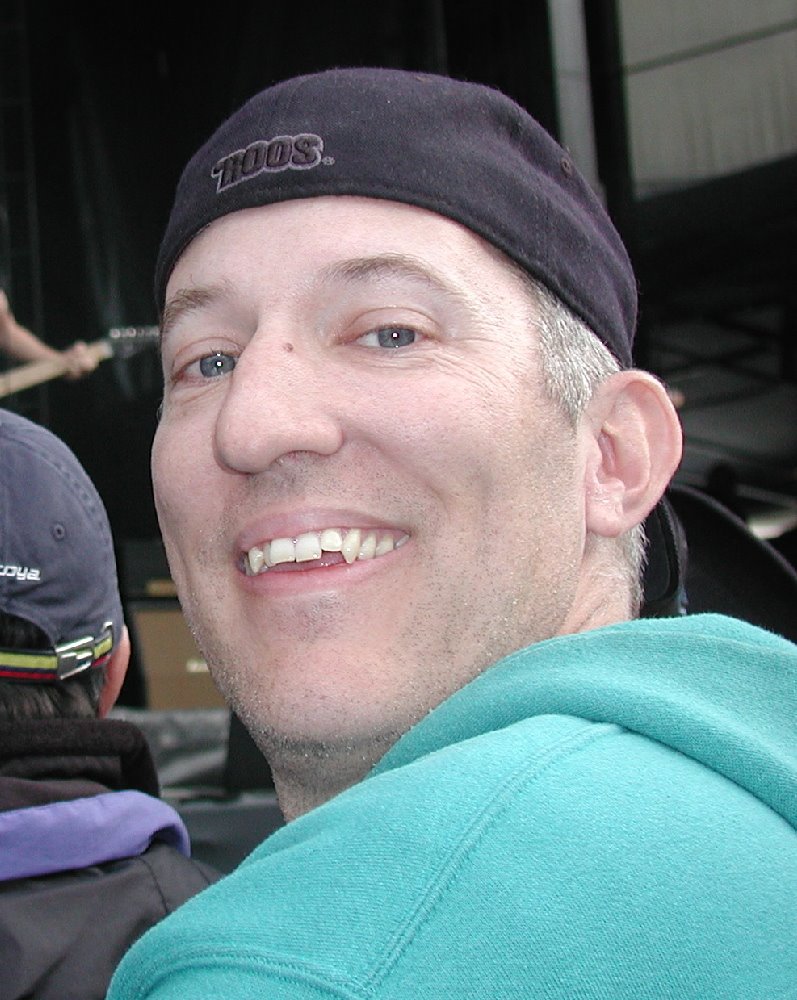 On June 21, 1986 my life changed. The day began hot and sunny in eastern Washington as I prepared for my first time away from home. I was to work at a Christian camp for the summer. Lake Retreat was several hours from home in western Washington. I was both excited and nervous about making new friends and being farther from home for an extended time than I had ever been before. My dad dropped me off at camp and got me settled, but he had to leave to get back for a service that evening. It was a long afternoon until more people arrived. My anxiety rose to new highs over the hours.
When the time for dinner came and I went down to the dining hall, it was with great trepidation. A person approached me and introduced herself and asked if she could introduce me to some of the others. We went over to a group of about 8 others and each person said hello. One guy gave a little wave and smiled with such sincerity that I wanted to get to know him a bit better. Over the next few days, our paths crossed during our training. And within the next two weeks, I knew he was the one. I was going to marry him.
Even though I knew he was a great guy and he make me laugh, I had no idea at the time just how much of my soul mate he would become. We married 14 months later. Over the years, I have come to rely on him for my sanity. He is the world to me and I would never want to be with out him.
Monday, June 19, 2006

Sunday, June 18, 2006
My Father

My dad taught me how to hammer a nail, tape sheetrock, butcher chickens and pour concrete. My dad was the one I would recite my verses to at the end of each school year to earn a trophy. He was the one that made the rules that were firm. As I was thinking about what to write about him, I thought of too many good memories to pick just one. There was the afternoon he taught me to tape sheetrock when we worked side by side and talked about whatever came up. Then there was the day he started teaching me to drive and we couldn’t communicate if the clutch was in or out. Or the sunny afternoon when we were in the Forest City parade, or ice fishing, or camping, or ... There are so many times when we laughed together and other times when we have cried together. My dad is not perfect; he has shortcomings like anyone else. But he is my dad and I am glad he is. So, today is for him and all the imperfect, wonderful dads like him.


I love you, Daddy!
Wednesday, June 14, 2006
Flag Day
We were listening to Lars this afternoon when he talked about this and played the recording. I think it is fitting for both then and now.
Commentary on the Pledge of Allegiance
By Red Skelton
The following words were spoken by the late Red Skelton on his television program as he related the story of his teacher, Mr. Laswell, who felt his students had come to think of the Pledge of Allegiance as merely something to recite in class each day.

"I've been listening to you boys and girls recite the Pledge of Allegiance all semester and it seems as though it is becoming monotonous to you. If I may, may I recite it and try to explain to you the meaning of each word?"
I -- me, an individual, a committee of one.
PLEDGE -- dedicate all of my worldly goods to give without self pity.
ALLEGIANCE -- my love and my devotion.
ALLEGIANCE -- my love and my devotion.
TO THE FLAG -- our standard, Old Glory, a symbol of freedom. Wherever she waves, there's respect because your loyalty has given her a dignity that shouts freedom is everybody's job!
UNITED -- that means that we have all come together.
STATES -- individual communities that have united into 48 great states. Forty-eight individual communities with pride and dignity and purpose; all divided with imaginary boundaries, yet united to a common purpose, and that's love for country.
AND TO THE REPUBLIC -- a state in which sovereign power is invested in representatives chosen by the people to govern. And government is the people and it's from the people to the leaders, not from the leaders to the people.
FOR WHICH IT STANDS, ONE NATION -- one nation, meaning "so blessed by God"
INDIVISIBLE -- incapable of being divided.
WITH LIBERTY -- which is freedom -- the right of power to live one's own life without threats, fear or some sort of retaliation.
AND JUSTICE -- the principle or quality of dealing fairly with others.
FOR ALL -- which means, boys and girls, it's as much your country as it is mine.
UNITED -- that means that we have all come together.
STATES -- individual communities that have united into 48 great states. Forty-eight individual communities with pride and dignity and purpose; all divided with imaginary boundaries, yet united to a common purpose, and that's love for country.
AND TO THE REPUBLIC -- a state in which sovereign power is invested in representatives chosen by the people to govern. And government is the people and it's from the people to the leaders, not from the leaders to the people.
FOR WHICH IT STANDS, ONE NATION -- one nation, meaning "so blessed by God"
INDIVISIBLE -- incapable of being divided.
WITH LIBERTY -- which is freedom -- the right of power to live one's own life without threats, fear or some sort of retaliation.
AND JUSTICE -- the principle or quality of dealing fairly with others.
FOR ALL -- which means, boys and girls, it's as much your country as it is mine.
And now, boys and girls, let me hear you recite the Pledge of Allegiance:
"I pledge allegiance to the Flag of the United States of America, and to the Republic, for which it stands; one nation, indivisible, with liberty and justice for all."
Since I was a small boy, two states have been added to our country and two words have been added to the Pledge of Allegiance...
UNDER GOD
Wouldn't it be a pity if someone said that is a prayer and that would be eliminated from schools too?
Subscribe to:
Posts (Atom)